
Lance!
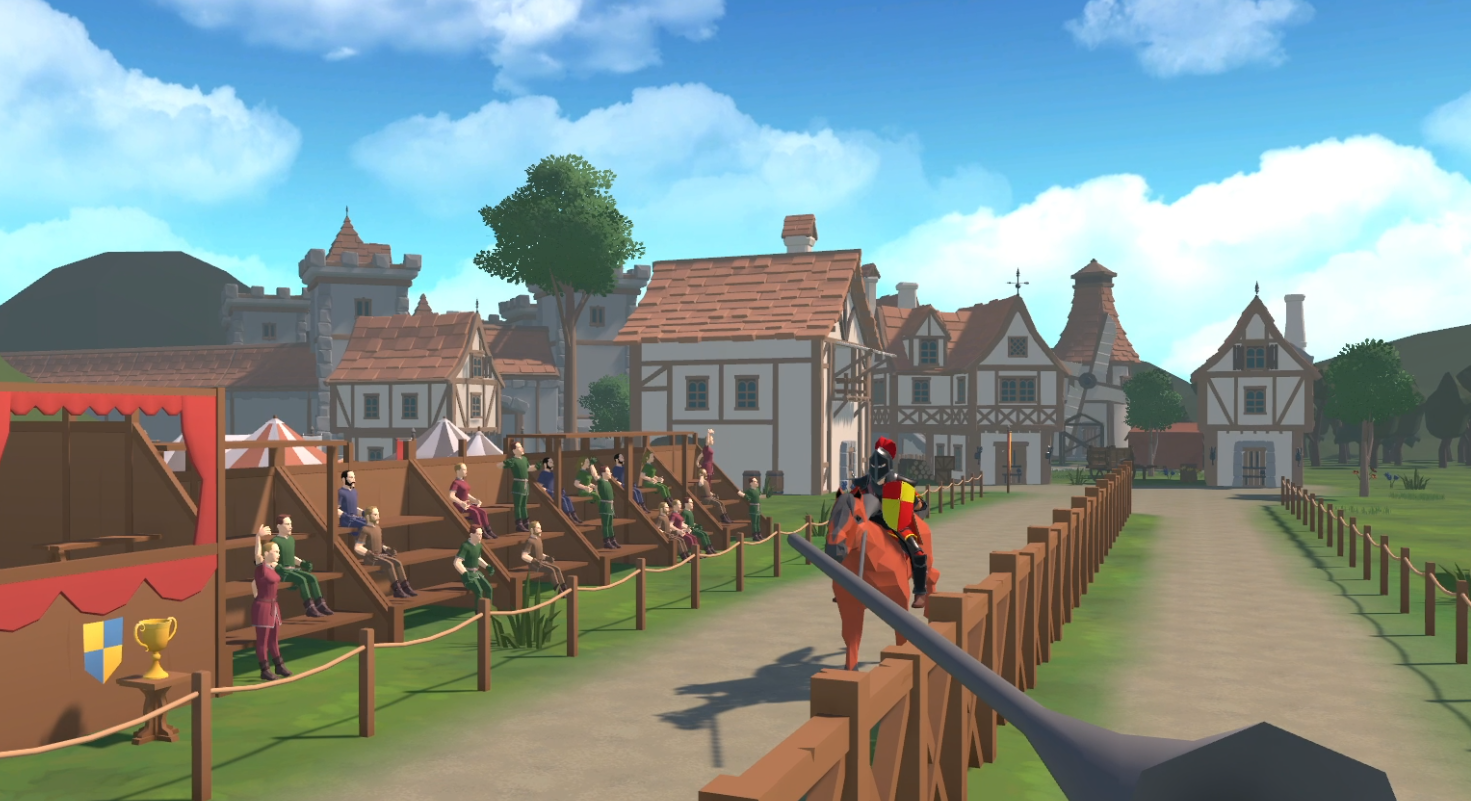
For about two weeks now I’ve been building a new game in Unity. After spending so much time with Zothique, I wasn’t sure where to turn next.
A Knight’s Tale has always been my favourite film. I know critics have a mixed appraisal of it, but you will often find historians heralding it as one of the most historically-accurate medieval films released.
So far I’ve mainly been focusing on building the scene, finding assets and creating the key systems that support the tilting feature. This required a lot of work with colliders and detectors to ensure the correct amount of points are allotted for each strike.
In A Knight’s Tale the scoring system is quite straightforward. Across Europe in the middle ages, many scoring systems were in place, it seems, and from one town to the next you could expect different rules.
I have subscribed in essence to the rules of John Tiptoft, Earl of Worcester, penned in the year 1466, although the game is set around 1350, just after the beginning of the Hundred Years’ War.
‘Tiptoft’s Rules’ are a little hard to interpret, but give an overall idea of what is allowed, what is not, and what constitutes a win. I have elected to use this system:
Lance broken due to a strike on the opponent’s arm: 1 point
Lance broken due to a strike on the opponent’s chest: 2 points
Lance broken due to a strike on the opponent’s shield: 3 points
Lance broken due to a strike on the opponent’s helm: 5 points
Unhorsing an opponent simply advances the player to the next round of the tournament. If a round ends with both players on the same score (even if that is 0), both opponents enter a Sudden Death round(s) where whoever scores the most points or unhorses the other wins the match.
